
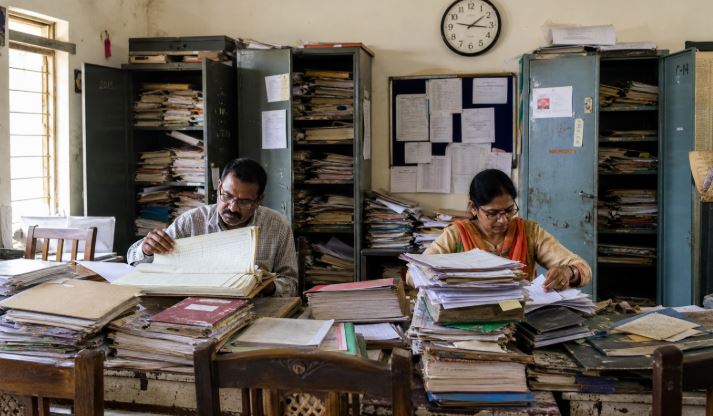
Manual school management continues to challenge institutions across India in 2026, despite rapid digital advancement. Schools relying on paperwork and disconnected processes often face inefficiencies, errors, and communication gaps.
These issues not only affect administrative productivity but also impact students, teachers, and parents. Understanding the core problems with traditional school systems helps decision-makers recognise the urgent need for modern solutions like school ERP software and automation tools.
Why is Manual School Management Still a Major Challenge in 2026?
Many schools still depend on outdated administrative methods due to budget concerns, lack of awareness, or resistance to change. However, manual systems create bottlenecks in data handling, communication, and reporting.
As educational demands grow, these traditional approaches fail to meet expectations, leading to inefficiencies that hinder institutional growth and student success.
10 Problems with Manual School Management 2026

1. Inefficient Record Keeping
Manual record keeping involves maintaining large volumes of paper files, which are difficult to organise and retrieve. Schools often struggle with misplaced or damaged documents, leading to delays in accessing student or staff information.
This inefficiency increases administrative workload and reduces productivity. Additionally, updating records manually is time-consuming and prone to inconsistencies, making it harder to maintain accurate and up-to-date data across departments.
2. High Risk of Human Errors
Manual data entry increases the likelihood of mistakes in attendance, grades, and fee records. Even minor errors can create significant confusion and require additional time to correct. These inaccuracies may impact student performance reports and financial records.
Without automated validation systems, schools find it difficult to ensure data accuracy, which ultimately affects decision-making and institutional credibility.
3. Poor Communication System
Traditional school management relies heavily on notices, diaries, and verbal communication. This often leads to delays or miscommunication between teachers, parents, and administrators.
Important updates may not reach stakeholders on time, causing confusion. In a fast-paced environment, the lack of a centralised communication system limits collaboration and reduces overall efficiency in school operations.
4. Time-Consuming Administrative Tasks
Routine tasks such as attendance tracking, report generation, and timetable management require significant manual effort. Staff members spend hours completing repetitive work that could be automated.
This reduces time available for core educational activities. Over time, the excessive administrative burden leads to decreased productivity and staff burnout.
5. Lack of Data Security
Paper-based records are vulnerable to theft, loss, or damage due to fire, water, or mishandling. Sensitive student and staff information is not adequately protected. Without encryption or backup systems, schools risk losing critical data permanently.
This lack of security poses serious concerns, especially with increasing awareness around data privacy and compliance requirements.
6. Difficulty in Fee Management
Managing fee collection manually can be complex and error-prone. Tracking payments, pending dues, and generating receipts requires extensive effort. Mistakes in financial records can lead to disputes with parents.
Additionally, the absence of real-time tracking makes it difficult for administrators to monitor financial health and plan budgets effectively.
7. Limited Reporting and Analytics
Manual systems do not provide advanced reporting capabilities. Generating insights from data requires compiling information from multiple sources, which is time-consuming and often inaccurate.
Schools lack access to real-time analytics that could help improve academic performance and operational efficiency. This limits strategic planning and informed decision-making.
8. Attendance Tracking Challenges
Recording attendance manually for students and staff is tedious and prone to errors. Maintaining registers and calculating attendance percentages takes time and effort.
Inaccurate attendance data can affect academic evaluations and compliance requirements. Without automation, schools struggle to maintain consistency and transparency in attendance records.
9. Ineffective Resource Management
Manual systems make it difficult to track and manage school resources such as classrooms, staff schedules, and inventory.
This often leads to underutilisation or conflicts in resource allocation. Without proper visibility, administrators cannot optimise usage or plan effectively, resulting in inefficiencies across the institution.
10. Scalability Issues
As schools grow, managing operations manually becomes increasingly complex. Expanding student numbers and administrative tasks overwhelm existing systems.
Manual processes cannot scale efficiently, leading to delays and reduced service quality. Schools need flexible systems that can adapt to growth without compromising efficiency.
Manual vs Digital School Management
| Aspect | Manual System | Digital System |
| Data Storage | Paper-based | Cloud-based |
| Accuracy | Error-prone | High accuracy |
| Time Efficiency | Slow | Fast |
| Communication | Limited | Real-time |
| Security | Low | High |
| Reporting | Basic | Advanced analytics |
Conclusion
The limitations of manual school management in 2026 clearly highlight the need for digital transformation in education. From inefficiencies and errors to security risks and scalability challenges, traditional methods no longer meet modern demands.
Schools must adopt advanced management systems to streamline operations, improve communication, and enhance decision-making. Embracing technology is no longer optional but essential for institutions aiming to deliver quality education and maintain operational excellence.
FAQs
What are the biggest disadvantages of manual school management?
Manual systems are slow, error-prone, and inefficient. They require significant human effort and lack automation, making it difficult to manage data, communication, and reporting effectively.
Why do schools still use manual management systems?
Some schools continue using manual methods due to budget constraints, lack of awareness, or resistance to adopting new technology.
How does manual management affect students?
It can lead to errors in records, delayed communication, and inefficient processes that impact the overall learning experience.
Is manual school management secure?
No, paper-based systems are vulnerable to loss, damage, and unauthorised access, making them less secure than digital alternatives.
What is the solution to manual school management problems?
Implementing a digital school management system or ERP software helps automate processes, improve accuracy, and enhance overall efficiency.