
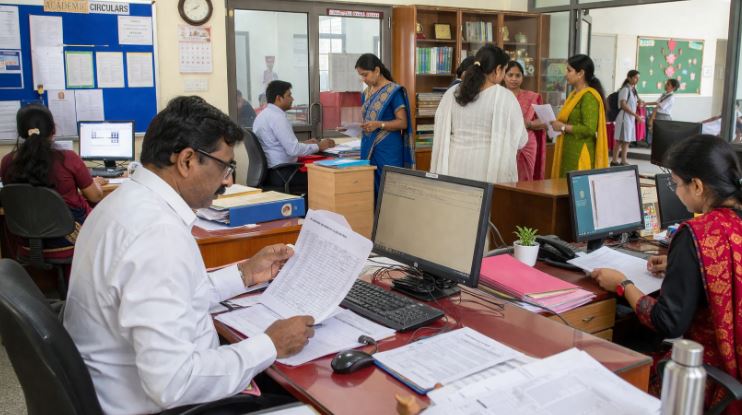
Educational institutions in India are rapidly adopting digital solutions to manage their growing administrative responsibilities. Managing staff records, salaries, compliance, and attendance manually can lead to inefficiencies and errors.
An ERP with HR and Payroll System helps streamline these operations by integrating all processes into one platform.
It not only improves accuracy but also enhances transparency and decision making. This blog explains how such systems benefit schools and colleges in a practical and impactful way.
Why Do Educational Institutions Need an ERP with HR and Payroll System?
Educational institutions today deal with multiple administrative challenges that require accuracy and efficiency. Managing teaching and non teaching staff, tracking attendance, and ensuring timely salary processing can become complex without a centralised system. This is where ERP software plays a critical role.
Manual systems often lead to data duplication and delays. When institutions rely on spreadsheets or disconnected tools, it becomes difficult to maintain consistency. Errors in payroll or employee records can affect staff satisfaction and compliance.
An ERP with HR and Payroll System simplifies these tasks by bringing everything into a unified platform.
Key needs addressed include:
- Centralised staff data management
- Automated salary calculations
- Real time tracking of employee records
- Reduced administrative burden
By adopting ERP, institutions can focus more on academic excellence rather than operational inefficiencies.
How Does ERP with HR & Payroll System Benefit Educational Institutions?
An ERP system provides a wide range of benefits that directly impact the efficiency of educational institutions. One of the major advantages is automation. Tasks like attendance tracking, payroll processing, and report generation are handled automatically, saving time and effort.
Another important benefit is accuracy. Since data is entered once and used across modules, the chances of errors are significantly reduced. This is especially useful in payroll where precision is essential.
Institutions also gain better visibility into operations. Real time reports help administrators make informed decisions regarding staffing, budgeting, and compliance.
Core benefits include:
- Improved operational efficiency
- Accurate payroll processing
- Better staff management
- Enhanced transparency
Overall, ERP systems enable institutions to operate smoothly while maintaining high standards of accountability.
What Features Should an ERP Software for Educational Institutions Include?

A good ERP system for educational institutions must include features that address both academic and administrative needs. The HR and payroll modules are among the most critical components.
The HR module should handle employee lifecycle management from recruitment to retirement. It should also include attendance tracking and leave management features.
The payroll module should automate salary calculations, deductions, and statutory compliance. Integration with other modules ensures seamless data flow.
Essential features
- Employee database management
- Attendance and leave tracking
- Automated payroll processing
- Compliance management for taxes and regulations
- Integration with academic and finance modules
These features ensure that institutions can manage their workforce efficiently while maintaining compliance with Indian regulations.
How Does ERP Simplify HR Management in Schools and Colleges?
HR management in educational institutions involves handling large volumes of staff data. This includes teachers, administrative staff, and support personnel. Managing this manually can be time consuming and prone to errors.
ERP systems simplify HR processes by digitising employee records and automating routine tasks. From onboarding new staff to tracking their performance, everything is managed within a single system.
Key HR Simplifications
- Streamlined onboarding process
- Automated attendance tracking
- Efficient leave management
- Performance evaluation tools
With ERP, administrators can easily access employee information and generate reports. This improves decision making and ensures that HR processes are consistent and transparent.
How Does Payroll Automation Improve Accuracy and Compliance in Education Sector?
Payroll is one of the most sensitive areas in any institution. Errors in salary calculation or delays in payment can affect employee morale. ERP systems address this by automating the entire payroll process.
The system calculates salaries based on attendance, leaves, and predefined salary structures. It also handles deductions such as taxes, provident fund, and other statutory requirements in India.
Payroll Advantages
- Accurate salary calculations
- Timely payslip generation
- Automatic tax and compliance handling
- Reduced risk of human errors
Automation ensures that payroll is processed quickly and accurately. It also helps institutions stay compliant with government regulations, which is essential for smooth operations.
What Are the Key Benefits of Implementing ERP with HR and Payroll System in India?

In the Indian education sector, institutions are increasingly adopting ERP systems to improve efficiency and scalability. These systems offer several benefits that align with the needs of modern institutions.
One of the major benefits is cost efficiency. By reducing manual work and errors, institutions can save both time and resources. ERP systems also improve transparency, which builds trust among staff.
Key benefits in India
- Better compliance with Indian labour laws
- Cost and time savings
- Improved transparency in HR processes
- Scalable solutions for growing institutions
Cloud based ERP solutions are especially in India as they allow access from anywhere, making management more flexible and efficient.
How to Choose the Best ERP with HR and Payroll System for Your Institution?
Choosing the right ERP system is crucial for achieving desired results. Institutions must evaluate their specific needs before selecting a solution. Factors like scalability, ease of use, and vendor support should be considered.
It is also important to choose a system that can be customised according to the institution’s requirements. Reliable support from the vendor ensures smooth implementation and ongoing maintenance.
Selection criteria
- User friendly interface
- Customisation options
- Strong customer support
- Integration capabilities
- Cost effectiveness
By selecting the right ERP solution, institutions can ensure long term success and operational efficiency.
What Makes Modern Education ERP Solutions Essential for Digital Transformation?
Digital transformation is becoming essential for educational institutions in 2026. ERP systems play a central role in this transformation by integrating various functions into a single platform.
Modern ERP solutions go beyond HR and payroll. They connect academic management, fee processing, and communication systems. This creates a seamless digital ecosystem for institutions.
Institutions that adopt ERP systems are better prepared to handle future challenges. They can adapt to changing requirements and provide better services to students and staff.
ERP systems are not just tools but strategic assets that support growth and innovation in education.
Conclusion
An ERP with HR and Payroll System is a powerful solution for educational institutions looking to improve efficiency and accuracy. It simplifies complex administrative tasks, ensures compliance, and enhances transparency.
By adopting such systems, schools and colleges can focus more on delivering quality education while maintaining smooth operations. In today’s digital era, ERP is not just an option but a necessity for sustainable growth.
FAQs
How does ERP help in reducing administrative workload in schools?
ERP automates routine tasks such as attendance tracking and payroll processing, which reduces manual effort and saves time for administrative staff.
Can small schools in India afford ERP with HR and payroll systems?
Yes, many ERP providers offer scalable and affordable solutions that cater to the needs of small and medium sized institutions.
Is data security maintained in cloud based education ERP systems?
Modern ERP systems use advanced security measures such as encryption and access control to protect sensitive data.
How long does it take to implement an ERP system in an institution?
The implementation time depends on the size of the institution but usually ranges from a few weeks to a few months.
Can ERP systems integrate with existing school software?
Yes, most ERP systems are designed to integrate with other software such as learning management systems and accounting tools.