
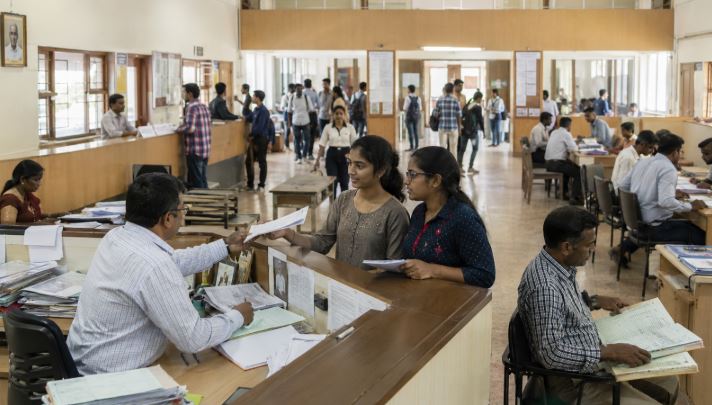
A centralized university data management system is a digital platform that helps universities manage student, faculty, academic, administrative, finance, examination, and institutional data in one secure place.
In India, where higher education institutions handle large volumes of records every day, such a system supports faster decision-making, better transparency, and smoother administration. It reduces manual work and helps institutions create a connected digital campus.
Why Does a University Need a Centralized University Data Management System?
A university manages admissions, attendance, fees, examinations, placements, faculty details, hostel records, library data, and compliance reports. When this data is stored in different departments or separate files, it becomes difficult to access, update, and verify.
A centralized university data management system solves this issue by bringing all important information into one platform. It allows authorised users to access accurate data whenever required.
Key needs include:
- Faster student record management
- Better academic planning
- Reduced paperwork
- Improved reporting
- Secure data storage
For Indian universities, this system is especially useful because it supports large student databases, multi-campus operations, and regulatory documentation.
What Is a Centralized University Data Management System?
A centralized university data management system is software that stores, manages, and connects all university-related data through a single digital database. Instead of using separate systems for admissions, exams, accounts, and administration, the university can manage everything from one integrated platform.
It usually includes modules for student information, faculty management, course details, attendance, fees, examinations, results, certificates, communication, and reports.
This type of system improves coordination between departments. For example, when a student’s admission data is updated, the same information can be used by the accounts department, examination cell, library, hostel, and academic office without repeated manual entry.
How Does a Centralized University Data Management System Work?

A centralized system works by collecting data from different departments and storing it in one secure database. Each department receives role-based access, so users can only view or update the information relevant to their work.
For example, the admission team can manage applications, the finance team can track fees, faculty can update attendance, and administrators can generate reports.
The system may include:
- A central database
- User login and access control
- Department-wise modules
- Cloud or server-based storage
- Automated reports and dashboards
This connected workflow helps universities avoid duplication, errors, and delays. It also allows management to track academic and administrative performance in real time.
What Are the Main Features of a Centralized University Data Management System?
A good centralized university data management system includes multiple features that support day-to-day institutional operations. These features help universities manage the complete student lifecycle from admission to graduation.
Common features include student admission management, attendance tracking, fee management, examination management, result processing, faculty records, timetable management, document storage, and analytics.
It may also support SMS, email, mobile app access, online payments, and student portals.
| Feature | Purpose |
| Student Information System | Stores complete student records |
| Admission Management | Handles applications and enrolment |
| Examination Module | Manages exams, marks, and results |
| Fee Management | Tracks payments and dues |
| Faculty Management | Maintains staff records and workload |
| Reports & Analytics | Supports decision-making |
These features make university administration more organised and efficient.
How Does It Improve Student Data Management?
Student data management is one of the most important functions of any university. A centralized platform stores each student’s academic, personal, financial, and administrative records in one place.
This helps staff quickly access student profiles, attendance, fee status, exam results, certificates, and communication history. It also reduces the risk of missing documents or duplicate records.
For students, it creates a smoother experience because they can access important services through a portal or mobile application. They may check attendance, download results, pay fees, submit forms, and receive announcements without visiting multiple offices.
This improves transparency and saves time for both students and university staff.
How Can a Centralized System Support University Administration?
University administration depends on accurate information and timely coordination. A centralized university data management system helps administrators monitor different activities from a single dashboard.
It supports better planning for admissions, faculty allocation, course management, examinations, financial tracking, and institutional reporting. Senior management can view real-time reports instead of waiting for manual updates from departments.
This system also improves accountability. Since every action is recorded digitally, it becomes easier to track updates, approvals, and pending tasks.
For Indian universities, this is useful for managing compliance, accreditation, audit preparation, and large-scale academic operations.
Why Is Data Security Important in University Data Management?
Universities handle sensitive information such as student identity details, academic records, payment data, staff information, and examination results. Therefore, data security is a major requirement.
A centralized system protects data through secure login, password control, access permissions, encryption, backup, and audit logs. Only authorised users can access specific information.
This reduces the risk of data loss, unauthorised access, and manual record damage. Regular backups also help universities recover information during technical failures.
Security is not only about protecting files. It also builds trust among students, parents, faculty, and management.
How Does VAPS Help in Centralized University Data Management?
VAPS can support universities by offering digital solutions that simplify academic and administrative data management. Through a centralized platform, universities can manage student records, admissions, fees, attendance, examinations, reports, and communication more efficiently.
For institutions looking for digital transformation, VAPS can help reduce manual dependency and improve operational accuracy.
A VAPS-based centralized system may support:
- Student lifecycle management
- Department-level coordination
- Real-time reporting
- Secure record storage
- Better communication between stakeholders
By using such a system, universities can focus more on academic quality while routine administration becomes faster and more structured.
How Does a Centralized University Data Management System Help in Decision-Making?
Decision-making becomes stronger when university leaders have access to accurate and updated data. A centralized system provides reports on admissions, student performance, attendance, fee collection, faculty workload, course demand, and institutional growth.
Instead of relying on scattered files or delayed manual reports, management can use dashboards and analytics to understand trends.
For example, the university can identify low attendance patterns, course performance, pending fee cases, or department-wise academic outcomes. This helps in planning improvements.
Data-driven decision-making supports better resource allocation, academic quality, and long-term institutional development.
What Are the Benefits of a Centralized University Data Management System?
The benefits of a centralized university data management system are wide-ranging. It improves efficiency, accuracy, security, and communication across the institution.
Major benefits include reduced paperwork, faster access to records, better student services, improved reporting, and stronger administrative control.
It also reduces repeated data entry. When one department updates information, other authorised departments can use the same updated data.
For universities in India, the system can support digital transformation, multi-campus management, regulatory reporting, and better student engagement. It helps institutions move from manual administration to a modern, technology-driven education environment.
How Can Universities Choose the Right Centralized Data Management System?
A university should choose a system based on its size, academic structure, number of students, departments, and future growth plans. The software should be easy to use, secure, scalable, and customisable.
Important factors include module availability, cloud support, mobile access, user training, data migration, technical support, and reporting features.
The institution should also check whether the system can integrate with existing tools such as learning management systems, payment gateways, biometric attendance, and communication platforms.
Choosing the right platform ensures long-term value and smoother implementation.
Conclusion
A centralized university data management system is essential for modern higher education institutions in India. It helps universities manage academic and administrative information through one secure and organised platform.
From student records to examinations, fees, reports, and decision-making, it improves every major process. By adopting a centralized system, universities can reduce manual work, increase accuracy, and build a more efficient digital campus.
FAQs
What is the purpose of a centralized university data management system?
The purpose of a centralized university data management system is to store and manage all institutional data in one secure platform.
Is a centralized university data management system useful for Indian universities?
Yes, it is highly useful for Indian universities because many institutions manage large student volumes, multiple departments, compliance requirements, and academic records.
Can a centralized system reduce paperwork in universities?
Yes, it can reduce paperwork by digitising records, forms, reports, fee details, attendance, and examination data. This helps staff save time and reduces dependency on physical files.
How does centralized data management improve student services?
It improves student services by giving students quicker access to attendance, results, fee payments, certificates, announcements, and academic information through digital portals or applications.
Is university data safe in a centralized system?
University data can be safe when the system uses secure login, role-based access, encryption, regular backups, and audit tracking.