
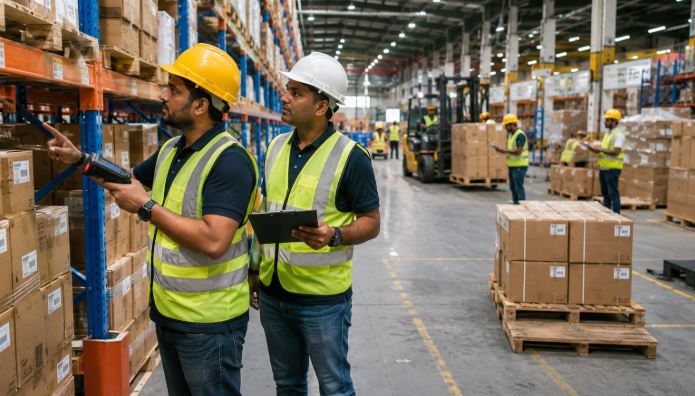
Inventory management has become increasingly complex as businesses handle larger product catalogues, multiple warehouses, changing customer demands, and evolving supply chain requirements. Traditional inventory systems often struggle to keep up with these challenges, leading to stock shortages, excess inventory, and operational inefficiencies.
AI inventory management software helps organisations overcome these issues by using advanced analytics, machine learning, and automation to improve inventory accuracy and decision-making.
By providing real-time insights and predictive capabilities, AI-powered solutions enable businesses to optimise stock levels, reduce costs, and enhance overall operational performance.
Why Do Businesses Struggle with Inventory Inaccuracy?
One of the most common challenges faced by businesses is inventory inaccuracy. Manual inventory tracking methods often result in discrepancies between actual stock and recorded inventory. These errors can occur due to data entry mistakes, misplaced products, theft, or delayed updates.
AI inventory management software addresses this issue by continuously monitoring inventory movements and automatically updating stock records in real time. Advanced technologies such as barcode scanning, RFID tracking, and machine learning algorithms help ensure greater inventory accuracy.
Key benefits include:
- Real-time inventory updates
- Reduced human errors
- Improved stock visibility
- Faster inventory audits
By maintaining accurate inventory data, businesses can make informed purchasing and replenishment decisions while minimising costly mistakes.
How Can AI Inventory Management Software Prevent Stockouts?

Stockouts can significantly impact customer satisfaction and revenue. When products are unavailable, customers may switch to competitors, resulting in lost sales and damaged brand reputation.
AI-powered inventory systems analyse historical sales data, seasonal trends, customer buying patterns, and market conditions to forecast future demand accurately. These predictive capabilities enable businesses to maintain optimal inventory levels and reorder products before shortages occur.
The software can:
- Monitor demand fluctuations
- Generate automated replenishment alerts
- Predict future stock requirements
- Recommend optimal reorder quantities
As a result, organisations can reduce stockout risks while ensuring that customers consistently find the products they need.
What Challenges Can AI Inventory Management Software Solve?
The primary objective of AI inventory management software is to solve operational inefficiencies that affect inventory performance. Businesses often face multiple inventory-related challenges simultaneously, including inaccurate forecasting, overstocking, stockouts, poor warehouse management, and rising carrying costs.
AI solutions tackle these issues through intelligent automation and data-driven insights. They continuously evaluate inventory patterns and identify opportunities for improvement.
Some major challenges solved by AI include:
| Challenge | AI Solution |
| Stockouts | Predictive demand forecasting |
| Overstocking | Inventory optimisation algorithms |
| Manual errors | Automated data processing |
| Slow decision-making | Real-time analytics |
| Warehouse inefficiencies | Intelligent stock allocation |
| High inventory costs | Optimised inventory levels |
By addressing these challenges proactively, AI enables businesses to operate more efficiently and profitably.
How Does AI Reduce Overstocking and Excess Inventory?
While stock shortages create problems, excess inventory can be equally damaging. Overstocking ties up valuable capital, increases storage costs, and creates risks associated with obsolete or expired products.
AI inventory management software helps businesses strike the right balance between supply and demand. Using predictive analytics, the system evaluates purchasing patterns, supplier lead times, and market trends to determine ideal stock levels.
Benefits include:
- Lower storage expenses
- Reduced inventory carrying costs
- Better cash flow management
- Improved inventory turnover
Businesses can avoid unnecessary purchases and maintain lean inventory operations without compromising customer service levels.
Can AI Improve Demand Forecasting Accuracy?
Demand forecasting is one of the most critical aspects of inventory management. Traditional forecasting methods often rely on limited historical data and manual calculations, making them vulnerable to inaccuracies.
AI systems use machine learning algorithms to analyse vast amounts of information from multiple sources, including:
- Historical sales records
- Market trends
- Customer behaviour
- Seasonal demand variations
- Promotional activities
The software continuously learns from new data and refines its predictions over time. This dynamic forecasting approach enables businesses to respond quickly to changing market conditions and make more accurate inventory planning decisions.
Improved forecasting accuracy helps organisations reduce waste, improve service levels, and maximise profitability.
How Does AI Optimise Warehouse Operations?
Warehouse efficiency directly affects inventory performance. Poor warehouse management can lead to delayed order fulfilment, misplaced inventory, and increased operational costs.
AI inventory management software improves warehouse operations by analysing inventory movement patterns and recommending optimal storage locations. The software can identify fast-moving products and place them in easily accessible areas, reducing picking and packing times.
Additional advantages include:
- Faster order processing
- Better space utilisation
- Reduced labour costs
- Improved inventory accessibility
AI-driven warehouse optimisation enhances productivity while ensuring smooth inventory flow throughout the facility.
How Can Businesses Gain Better Inventory Visibility with AI?

Many organisations struggle with limited visibility across their inventory networks. When inventory data is scattered across multiple systems or locations, decision-makers may find it difficult to understand current stock positions.
AI-powered inventory management systems provide centralised dashboards that offer complete visibility into inventory activities. Businesses can track stock levels across warehouses, retail outlets, and distribution centres in real time.
This visibility enables organisations to:
- Monitor inventory performance instantly
- Identify inventory bottlenecks
- Track stock movement efficiently
- Improve inventory planning
Enhanced visibility supports faster and more informed business decisions, leading to better operational outcomes.
Why Is Real-Time Inventory Tracking Important?
In today’s fast-paced business environment, delayed inventory updates can lead to costly mistakes. Real-time inventory tracking ensures that inventory records accurately reflect current stock conditions.
AI inventory management software captures and processes inventory data instantly, allowing businesses to react quickly to inventory changes. Whether inventory is received, transferred, sold, or returned, the system updates stock information automatically.
Real-time tracking supports:
- Faster decision-making
- Improved order fulfilment
- Better customer service
- Enhanced inventory control
This capability is especially valuable for businesses managing high transaction volumes or multiple inventory locations.
How Does VAPS Group Support Modern Inventory Management Needs?
VAPS Group has established itself as a trusted provider of enterprise technology solutions that help businesses streamline their operations. Through advanced software development and digital transformation services, the company supports organisations seeking efficient inventory management systems that align with modern business requirements.
By incorporating technologies such as artificial intelligence, automation, analytics, and cloud-based platforms, VAPS Group enables businesses to improve inventory visibility, forecasting accuracy, and operational efficiency. Their solutions help organisations manage inventory challenges more effectively while supporting long-term business growth.
As inventory management continues to evolve, technology partners like VAPS Group play an important role in helping businesses adopt intelligent solutions that enhance productivity and competitiveness.
How Can AI Reduce Inventory Management Costs?
Inventory management costs can quickly escalate due to storage expenses, labour requirements, inventory losses, and inefficient procurement processes. AI-powered solutions help businesses identify cost-saving opportunities throughout the inventory lifecycle.
The software analyses purchasing patterns, supplier performance, inventory turnover rates, and warehouse operations to recommend process improvements.
Cost reduction benefits include:
- Lower warehousing expenses
- Reduced labour requirements
- Fewer inventory write-offs
- Improved procurement efficiency
- Better resource allocation
By minimising waste and improving operational efficiency, AI contributes significantly to overall cost optimisation.
Conclusion
As businesses face increasing pressure to manage inventory efficiently, artificial intelligence is becoming an essential component of modern inventory operations.
AI inventory management software helps organisations solve critical challenges such as inventory inaccuracies, stockouts, overstocking, poor forecasting, limited visibility, and rising operational costs. Through predictive analytics, automation, and real-time insights, AI enables smarter inventory decisions and improved business performance.
Companies that embrace AI-driven inventory solutions can achieve greater efficiency, enhanced customer satisfaction, and sustainable growth in an increasingly competitive marketplace.
FAQs
What industries benefit most from AI inventory management software?
AI inventory management software benefits retail, manufacturing, healthcare, e-commerce, logistics, wholesale distribution, and automotive industries by improving inventory accuracy and operational efficiency.
Is AI inventory management software suitable for small businesses?
Yes. Many AI-powered inventory solutions are scalable and can help small businesses improve forecasting, reduce stockouts, and optimise inventory costs.
How does AI improve inventory forecasting?
AI analyses historical sales data, market trends, customer behaviour, and seasonal patterns to generate highly accurate demand forecasts.
Can AI inventory management software integrate with ERP systems?
Most modern AI inventory solutions can integrate with ERP, CRM, warehouse management, and accounting systems for seamless data sharing.
What is the biggest advantage of using AI in inventory management?
The biggest advantage is the ability to make data-driven decisions through real-time insights, predictive analytics, and automated inventory optimisation.